Are rising enterprise software costs hurting your business? Good news – It doesn’t have to. Communication tools, project management tools, data storage tools, collaboration tools – yes, we need them. The problem isn’t the software programs that your business needs; it is the way that they are managed. Now that is something that can be fixed.
This blog will tell you exactly where you’re hemorrhaging money and how you can plug it before it bleeds you dry. The goal – cut enterprise overspend and increase cost efficiency.
Enterprises Overspend on Software – Why?
Overspending on enterprise software costs rarely happens because organizations deliberately invest in unnecessary tools. Many only realize the problem when budgets start creeping upward. There may be that latest app that one team could really do with, or small monthly subscriptions that add up – and before you know it, you have got a large spend you didn’t account for. This makes it tough to track enterprise software costs.
According to research, 50% of enterprises waste at least 10% of their annual expenditures on software and SaaS applications. This waste often comes from unused or redundant applications. This often happens when teams independently adopt tools without centralized oversight.
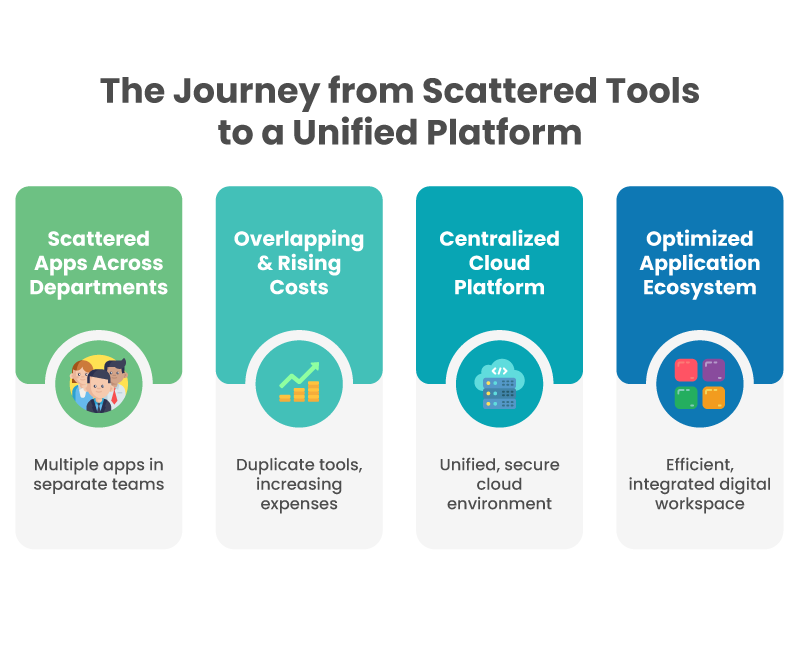
The result? A scattered software setup leads to overlapping apps. Employees handle many logins, and IT teams struggle to maintain control. It usually develops slowly as teams adopt solutions to solve immediate problems. Over time, this leads to what many IT leaders call SaaS sprawl.
Common Reasons Enterprise Software Costs Grow Unchecked
Rising software costs often come from broken systems. Infince helps you fix the system.
| Challenge | What Happens in Organizations | Business Impact |
|---|---|---|
| Department-level purchasing | Teams buy tools independently | Duplicate subscriptions |
| Shadow IT | Employees sign up for apps without IT approval | Security and compliance risks |
| Multiple logins | Separate credentials for each tool | Productivity loss |
| Overlapping functionality | Several tools perform similar tasks | Rising software subscriptions |
The Hidden Costs of a Fragmented Software Ecosystem
Organizations use around 125 to 200 SaaS applications on average. The real challenge though, is not the number of tools used but how disconnected they are.
When applications operate in silos, organizations lose visibility into their software environment.
This fragmentation creates several hidden costs:
- Duplicate Tools
Different departments may subscribe to similar applications without realizing it. Marketing and operations teams might each pay for their own project management tools.
- IT Administration Overhead
Managing dozens of applications requires constant effort from IT teams. Tasks like provisioning access, managing permissions, and troubleshooting integrations quickly consume valuable time.
- Security Risks
Multiple applications mean multiple access points. Without a centralized identity management system, it becomes difficult to know if security measures are being followed.
- Reduced Productivity
Employees are wasting time switching between tools, remembering passwords, and the lack of integration.These inefficiencies are what cause the cost of enterprise software to quietly rise over time, as well as the overall inefficiency of the business.
How Enterprise Application Cloud Can Improve Cost Efficiency
The solution to managing enterprise software costs is centralization. Not getting rid of all your apps, but centralizing how people access and manage these applications.
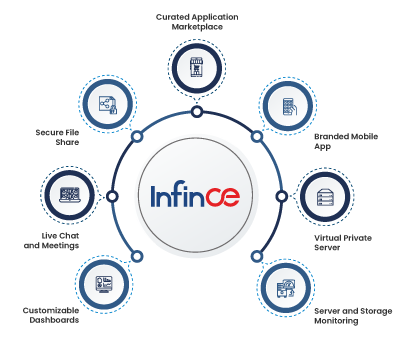
Infince is a platform that was developed to do just that. It provides a unified platform that helps businesses consolidate all their applications into a single controlled space.
This approach offers several advantages:
- Centralized visibility into all applications
- Simplified deployment of new tools
- Consistent security policies
- Reduced duplication of software subscriptions
Centralized app platforms help organizations manage enterprise software costs. They provide better control. This makes managing the technology stack easier.
The Role of Enterprise SSO in Reducing Costs
One of the biggest operational challenges in large organizations is identity management.
Employees often manage separate usernames and passwords for different applications. This not only slows down business processes but also increases the number of IT support requests.
Infince uses enterprise Single Sign-On (SSO) solutions that can play an important role in saving time and effort. With SSO, users log in just once. Then, they can securely access all approved apps in the organization.
Benefits of Enterprise SSO:
| Feature | Impact on Organizations |
|---|---|
| Single login access | Eliminates password fatigue |
| Centralized authentication | Improves security control |
| Faster onboarding | Employees gain access quickly |
| Reduced IT support tickets | Fewer password reset requests |
Centralizing identity and application access helps organizations reduce inefficiencies. It also keeps software costs under control.
Steps to Avoid Overspending on Enterprise Software
Controlling enterprise software costs requires more than simply cutting tools. There is a need to develop a structured approach to managing the applications. There are a number of steps that can be taken to improve the current situation:
- Audit Your Software Stack
Regular audits should be conducted to identify unused or underutilized apps. This helps organizations see which tools provide value and which can go.
How Infince helps: Infince Enterprise Application Cloud simplifies audits. It offers a central view of all applications and tools used in the organization. - Consolidate Similar Tools
If several apps do the same job, think about combining them into one solution.
How Infince helps: Infince offers a unified digital workplace platform. Productivity tools are easily accessible within one location. This includes tools like file storage, meetings, calendar, and task management. - Centralize Application Access
A unified access environment helps employees use approved tools. This way, they won’t buy their own alternatives.
How Infince helps: It offers centralized dashboards and an app marketplace. This lets organizations manage all their enterprise apps from one platform. - Implement Strong Identity Controls
IT departments need to efficiently handle user access.
How Infince helps: Infince facilitates centralized authentication. Single sign-on lets employees access many applications with just one login. - Monitor Usage and Adoption
Tracking tool usage shows organizations which apps are used and which aren’t.
How Infince helps: Infince Enterprise Application Cloud makes it easy for IT teams. It offers centralized administration and analytics dashboards. This helps them track adoption. They can also enhance their software stack.
Key Capabilities of Infince:
| Feature | How It Helps Enterprises |
|---|---|
| Secure private cloud environment | Provides a centralized place to run business applications |
| Single Sign-On | Allows users to access multiple apps with one login |
| App Marketplace | Enables quick discovery and deployment of business tools |
| Custom app hosting | Allows organizations to deploy existing company applications |
| Infince Workplace Bundle | Offers optional built-in productivity apps such as an intranet and collaboration toolss |
Optimize Enterprise Software Spending With Infince
Too many tools, duplicate subscriptions, lack of visibility – the Infince Enterprise Application Cloud helps organizations tackle all these challenges.
Infince unites applications, teams, and data in a secure digital workspace. This seamlessly combined force centralizes access and strengthens identity management. It also improves visibility across tools. The result? Clearer oversight, better technology investments, no overspend.
Ready to simplify your enterprise software landscape? Let’s explore how Infince Enterprise Application Cloud can help your business. Request a demo now!